Epoxy Resins & Hardeners
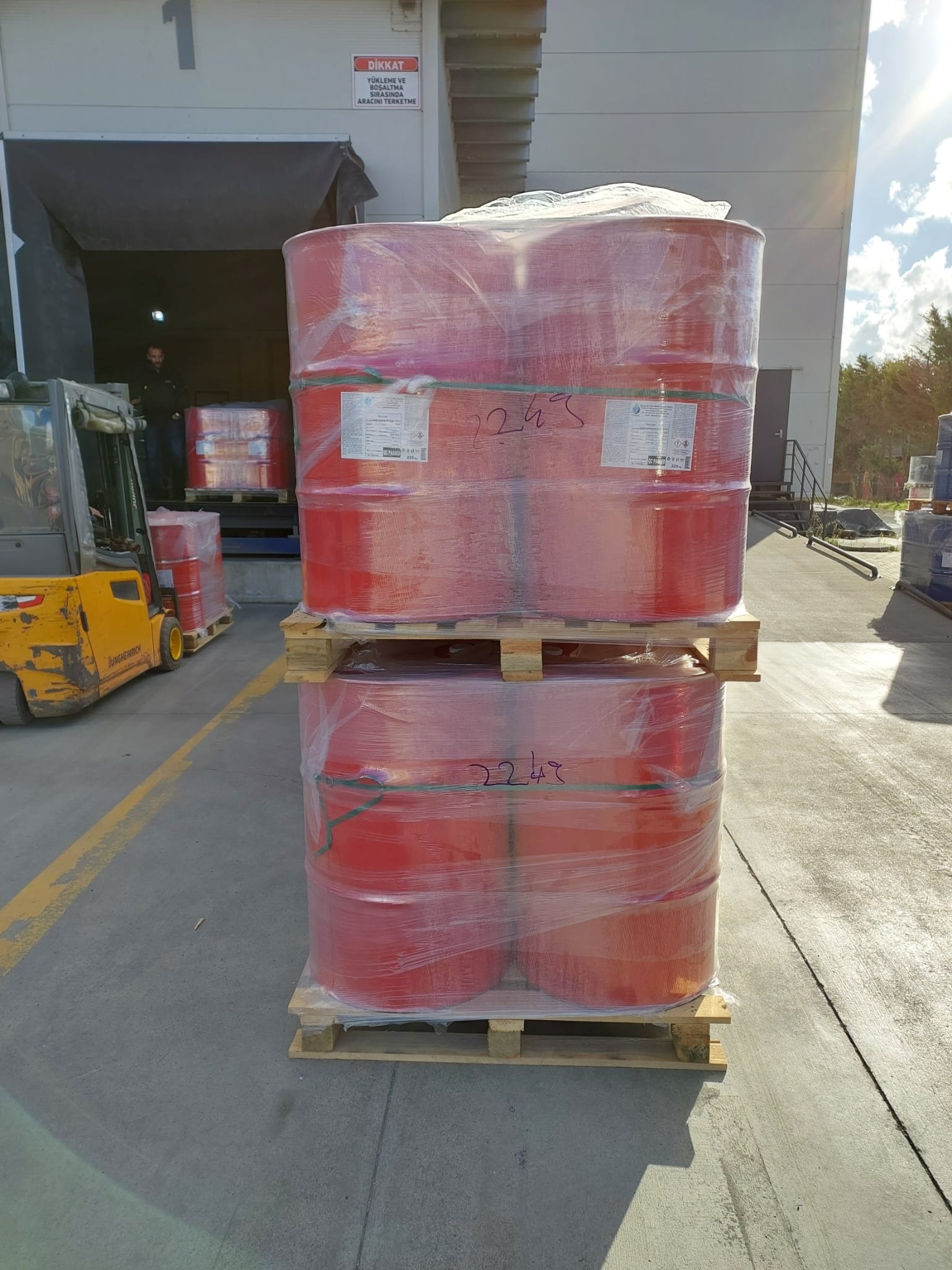
Building an epoxy formulation without assuming that every resin and hardener pair works together
Josoor sources epoxy resin families — including liquid, solid, bisphenol A, bisphenol F, and novolac options — alongside modified cycloaliphatic, aliphatic, aromatic, water-based, polyether-amine, and other hardener families. Resin and hardener pairing, ratio, cure schedule, and final performance must be confirmed for the selected grades.
Where this applies:
Coatings, flooring, mortars, adhesives, injection systems, grouts, and related construction or industrial epoxy formulations.
Tell us the intended system, substrate, cure conditions, and performance target — we’ll help coordinate compatible technical information.
Interested in this group? Our team is ready to help with specifications, sourcing, and pricing.
Josoor Group PDF Catalog
Epoxy Resins & Hardeners
Curing agents, epoxy resins, solvents, diluents and additives.9 pages · PDF · Includes technical tables and footnotes
Product descriptions and values below are reproduced from the supplied spreadsheet. Confirm exact-grade compatibility and current TDS/SDS before selection.
Epoxy Curing Agents
| Name | Characterstics | Main Field of Application | H-Active Eq. wt. (g/eq) | Viscosity @~23⁰C (mPa.S) | Color (Gardner) | Amount of Hardener (g)* | Pot-Life (~mins)** |
|---|---|---|---|---|---|---|---|
| SH-332 | Modified Cycloaliphatic Polyamine Adduct | Low viscosity for self-leveling floorings, coatings and mortars requiring good chemical and mechanical resistance with enhanced resistance to yellowing , Can be used in contact with drinking water and food production areas, 100% solids | 112 | 440 | <2 | 65 | 25 |
| SH-333 | Modified Cycloaliphatic Polyamine Adduct | Low viscosity hardener used in coatings and mortars for solvent free-system , Can be highly filed to give high compressive strength mortars, Can be applied at low ambient temperatures, 100% solids | 87 | 400 | <8 | 50 | 20 |
| SH-326 | Modified Cycloaliphatic Polyamine | Very low viscosity hardener used for injection epoxy systems, Grouting, mortar, adhesives. | 65 | 80 | <2 | 38 | 26 |
| SH-343 | Modified Aliphatic Polyamine | used as a hardener for elastic epoxy resin system, 100% solids | 134 | 350 | <4 | 75 | 25 |
| SH-317 | Modified aliphatic polyamine | Used as a hardener for primer, adhesives and coatings with at high ambient temperature, 100% solids | 76 | 190 | <4 | 44 | 75 |
| SH-347 | Modified aliphatic polyamine | Very low viscosity hardener used for coatings and primers, crack injection system , Adhesion and excellent mechanical properties, 100% solids | 47 | 40 | <3 | 25 | 32 |
| SH-366 | Mannich-base | High chemical resistance hardener recommended for medium setting time for mortars, adhesives, & coatings, For solvent-free system where high chemical resistance against acids, alkalis and solvents required, 100% solids | 65 | 1500 | <5 | 38 | 18 |
| SH-367 | Mannich-base | High chemical resistance hardener recommended for mortars, adhesives, and coatings with Fast setting time. For solvent-free system where high chemical resistance against acids, alkalis and solvents required, 100% solids | 75 | 1100 | <3 | 43 | 9 |
| SH-201 | Aliphatic amine curing agent | Diethylenetriamine- DETA Used as an additive in combination with suitable epoxy resin formulations for highly reactive systems and as accelerator for polyamide curing agents.Also used in maintenance paints, in adhesives and in combination with other hardeners for various applications. | ~21 | 7 | ~30 | NA | NA |
| SH-022 | Aliphatic amine curing agent | Triethylenetetramine- TETA Mainly used in combination with suitable epoxy resin formulations for highly reactive systems and as accelerator for polyamide curing agents.Also used in maintenance paints, in adhesives and in combination with other hardeners for various applications. | ~24 | 30 | ~50 | NA | NA |
| SH-027 | Cycloaliphatic polyamine | N-(2-Aminoethyl)-piperazin- AEP Mainly used as an additive in combination with suitable epoxy resin formulations as an accelerator for curing of solvent-free epoxy systems | ~43 | 18 | ~15 | NA | NA |
| SH-230 | Aliphatic amine curing agent | Polyether Amine Molecular weight 230 g/mol Di-Amine Used for 3D flooring and casting epoxy systems. - It is used as curing agent for epoxy resin with relatively high elongation, good toughness and thermal shock resistance. - It can be blended with higher-viscosity curing agents to reduce viscosity, or with cycloaliphatic to improve the elongation of higher-Tg cured resins. | ~60 | ~10 | ~25 | NA | NA |
| SH-403 | Aliphatic amine curing agent | Polyether Amine Molecular weight 440 g/mol Tri-Amine - It is used as curing agent for epoxy resin with relatively high elongation, good toughness and thermal shock resistance. improve the elongation of higher-Tg cured resins. | ~81 | ~75 | <100 | NA | NA |
| SH-368 | Mannich-base | High chemical resistance hardener recommended for mortars, adhesives, and coatings , Fast setting time hardener , For solvent-free system where high chemical resistance against acids, alkalis and solvents required | 185 | 6500 | <4 | 100 | 5 |
| SH-369 | Mannich-base, phenol free | High chemical resistance hardener recommended for mortars, adhesives, and coatings with Fast setting time to accelerate slow settings systems e.g. tar epoxy coating, mortars, etc. 100% Solids | 93 | 1900 | <3 | 54 | 11 |
| SH-381 | Modified Aromatic Polyamine | Very high chemical resistant hardener with a very slow setting time. It should be used in conjunction with SH-388 to adjust the required setting time of the system. This system is especially used when very high resistance against organic/inorganic acids, and alkalis. 100% Solids | 110 | 15000 | <10 | 64 | NA |
| SH-388 | Modified Aromatic Polyamine | Very high chemical resistant hardener with a very fast setting time. It should be used in conjunction with SH-381 to adjust the required setting time of the system. This system is especially used when very high resistance against organic/inorganic acids, and alkalis, and in situations where there is a high humidity in the floor. 100% Solids | 90 | 9000 | <8 | 52 | 14 |
| SH-502 | Water-Based modified cycloaliphatic polyamine | Water borne hardener which can be used with both solvent free epoxy resins and emulsified epoxy resin solutions eith very good film formation. Especially suited for concrete and steel substrates, 75% Solids | 185 | 17000 | <5 | 100 | 22 |
Swipe horizontally to view all columns.
* Based on a mix with 100g SR-215, modified low viscosity epoxy resin with bifunctional reactive thinner
**Pot life is measured as temperature increase from 23c to 40c with 100 ml of mixture in an insulated container
Epoxy Resins
| Name | Characterstics | Main Field of Application | EEW Epoxy Eq. wt. (g/eq) | Viscosity @~23⁰C (mPa.S) | Color (Gardener) | Hydrolyzable chlorine (ppm) |
|---|---|---|---|---|---|---|
| SR-128 | Bisphenol A- Liquid | High purity liquid resin, which is manufactured from bisphenol-A and epichlorohydrin. It is recognized as a standard form of variations epoxy resin | 184-194 | 11,000-14,000 | <2 | 1000 Max |
| SR-127 | Bisphenol A- Liquid | Lower Viscosity, high purity liquid resin, which is manufactured from bisphenol-A and epichlorohydrin. It is recognized as a standard form of variations epoxy resin | 180-190 | 8,000-11,000 | <2 | 1000 Max |
| SR-126 | Bisphenol A- Liquid | Lower viscosity, low color, high purity liquid resin, which is manufactured from bisphenol-A and epichlorohydrin. It is recognized as a standard form of variations epoxy resin | 170-176 | 3,500-5,500 | <2 | 300 Max |
| SR-213 | Bisphenol A – Liquid | Specially modified low-viscous epoxy resin with low tendency to crystallization. Preferably for solvent-free priming and coating systems.- It is especially used as a basis for self-leveling, pigmented floor coatings where a special value is put on optimum surface properties | 218 | 2000 | <2 | NA |
| SR-217 | Bisphenol A – Liquid | An epoxy resin binder, excellent wetting properties and good adhesion to substrate and glass fiber reinforcement. - It is especially used as a basis for high quality coatings in steel tank repair in oil fields, refineries, ship tanks , paper industry , water purifying plants ,etc. | 185 | 600 | <2 | NA |
| SRS-901 | Bisphenol A – Solid | Solid – white flakes | 450-550 | NA | NA | 100 |
| SR-170F | Bisphenol F – Liquid | Transparent liquid epoxy resin with lower viscosity than Bisphenol A, in addition , there is a higher proportion of trifunctional epoxy molecules, which increases the functionality available for crosslinking | 163-169 | 3,000-5,000 | <1 | 200 Max |
| SR-625 | Novolac Epoxy Resin | The higher viscosity and greater functionality of the novolacs make their heat and chemical resistance properties superior to those of bisphenol F | 168-178 | 9,000-13,000 | <1 | 300 Max |
Swipe horizontally to view all columns.
Solvents-Diluents & Additives
| Name | Main Field of Application | Appearance | Color (Hazen) | Main Parameter | Parameter (2) | Water Content | Safety Hazards |
|---|---|---|---|---|---|---|---|
| Benzyl-Alcohol | Solvent with a medium boiling point. mainly applied to: • Epoxy curing agents as a modifier and solvent. • Epoxy resin in paint, flooring, encapsulation, adhesives, etc. Chemical formula: C6H5CH2OH CAS Number: 100-51-6 | Clear, Colorless, oily liquid | <5 (~colorless) | BENZALDEHYDE: 86 ppm | SPECIFIC GRAVITY (20℃): 1.047 | ~0.029% | GHS07 |
| NonylPhenol | Used as a plasticizer and partial accelerator in the amine curing agents formulations to lower the viscosity and increase the reactivity of the thermoset epoxy formulations. | Clear viscous oily liquid | ~20 | Nonylphenol content %wt., min: ~99.10% | Hydroxyl number mg KOH/g: ~249.4 | ~0.02% | GHS05, GHS07, GHS08, GHS09 |
| Reactive Diluents | A wide range of epoxyy reactive diluents based on glycidyl ethers. Examples: Alkyl, butyl, benzyl, phenyl, castor oil, 2-ethyl hexyl… etc. | NA | APHA From 13 to 100 | Functionality: 1-2-3 | Viscosity <10 to +1000 | <0.1% | NA |
| Accelerator DMP-30 | 2,4,6,-Tris(dimethylaminomethyl)phenol CAS Number: 90-72-2 | NA | NA | NA | NA | NA | Hazard pictograms shown in brochure (corrosion, exclamation mark); no GHS codes labelled |
Swipe horizontally to view all columns.
Loading technical documents…